Sermon Outline
- The Parable of the Weeds: A farmer sows good seed, but an enemy secretly sows weeds at night; they grow together until harvest when angels will separate them—wheat into the barn, weeds into fire.
- Evil is Real and Present: The weeds represent those belonging to the devil; believers and unbelievers coexist in the world, creating genuine tension and difficulty that we cannot simply eliminate.
- God's Kingdom Grows Invisibly: The mustard seed (smallest seed becoming a large tree) and leaven (hidden yeast transforming flour) show that God's kingdom grows from impossibly small beginnings into something all-encompassing, even when unseen.
- Jesus Fulfills Hidden Scripture: Everything Jesus teaches was foreseen and planned; He reveals what prophets longed to see, making the hidden things of God's kingdom finally plain.
- Certain Final Judgment: At harvest, the righteous will shine like the sun in God's kingdom, while lawbreakers face eternal conscious judgment—Jesus speaks more plainly about hell than anyone in Scripture.
- Our Response: Patient Witness: We cannot prematurely judge or remove the weeds, but we must actively share the gospel with those heading toward judgment, making room for more to hear and respond.
- Look Beyond the News: While evil is visible and troubling, the real story is God's unstoppable kingdom growth toward a day when all hidden things will be revealed and sorted eternally.
The Parable of the Weeds presents a starkly realistic picture of the world as it currently exists. A farmer sows good seed expecting a harvest of wheat, but while everyone sleeps, an enemy deliberately sows weeds—specifically darnel, a plant that looks nearly identical to wheat in its early stages. This is not random vandalism but a calculated act of sabotage. When the servants discover the mixed crop and ask to remove the weeds, the master refuses, explaining that pulling up the weeds would tear out the wheat as well. His command is simple but profound: let both grow together until harvest. The master's response reveals something crucial about his character—he is neither panicked nor indifferent. He recognizes the enemy's work immediately and already has a plan. This teaches us that premature judgment, however well-intentioned, does more damage than it prevents.
Jesus himself provides the interpretation of this parable, leaving no room for guessing. The sower is the Son of Man (Jesus himself), the field is the world, the good seed represents the sons of the kingdom (believers), and the weeds are the sons of the evil one (unbelievers). This interpretation forces us to confront a sobering biblical truth: we either belong to God or we belong to the devil. There is no neutral moral ground. In our sin and rebellion, we end up serving God's enemy whether we acknowledge it or not. The world we inhabit is genuinely mixed—believers and unbelievers, wheat and weeds, growing up side by side in genuine tension. This creates real difficulty in our lives: difficult neighbors we cannot escape, challenging colleagues at work, estranged family members whose presence makes things harder. Jesus does not offer us a clean exit from these situations. Instead, he calls us to patience and to wait, trusting that God has a plan even when we cannot see the full picture.
To prevent despair from settling in, Jesus immediately follows the parable of the weeds with two additional short parables that reveal the hidden reality of God's kingdom growth. The parable of the mustard seed shows that the kingdom of heaven is like the smallest of all seeds, yet when it grows, it becomes larger than all garden plants, becoming a tree where birds nest in its branches. While technically a mustard seed produces a shrub rather than a tree, Jesus employs hyperbole to make his point: something impossibly small grows into something impossibly large. The image of birds nesting in the branches draws from Old Testament imagery of kingdoms pictured as great trees that shelter the nations. The parable of the leaven presents a woman working a small piece of fermented dough into three measures of flour—over 20 kilograms of dough worked entirely by hand. This is not a small family loaf but a feast-sized batch. The small portion of yeast spreads invisibly through the entire mass until all of it is leavened and ready. These two parables sit beside the parable of the weeds intentionally, together painting a profoundly realistic picture of the world: neither naively optimistic nor bitterly pessimistic, but rather a gospel realism that acknowledges both the growth of real evil and the unstoppable growth of God's kingdom, almost completely unseen until one day it becomes the most all-encompassing reality in human history.
These parables invite us to see what is genuinely happening beneath the surface of current events. While 665 people came to faith in Christ across one network of churches in a single year—a number that seems embarrassingly small against Australia's 28 million people—each number represents a real person: the man whose faith began with an unexpected conversation over a haircut, the teenager slowly worn down by the gospel week after week at youth group, the man who spent months working through his intellectual objections until he ran out of reasons to say no. But more importantly, these small numbers represent the continuation of a movement that started with a handful of disciples in Jerusalem 2,000 years ago. What is Jesus inviting us to see is the mustard seed that started in one small corner of the world and is still growing, still spreading, nowhere near finished. This is growth we can genuinely bank on—better than any stock market return because it is completely guaranteed and its return is eternal.
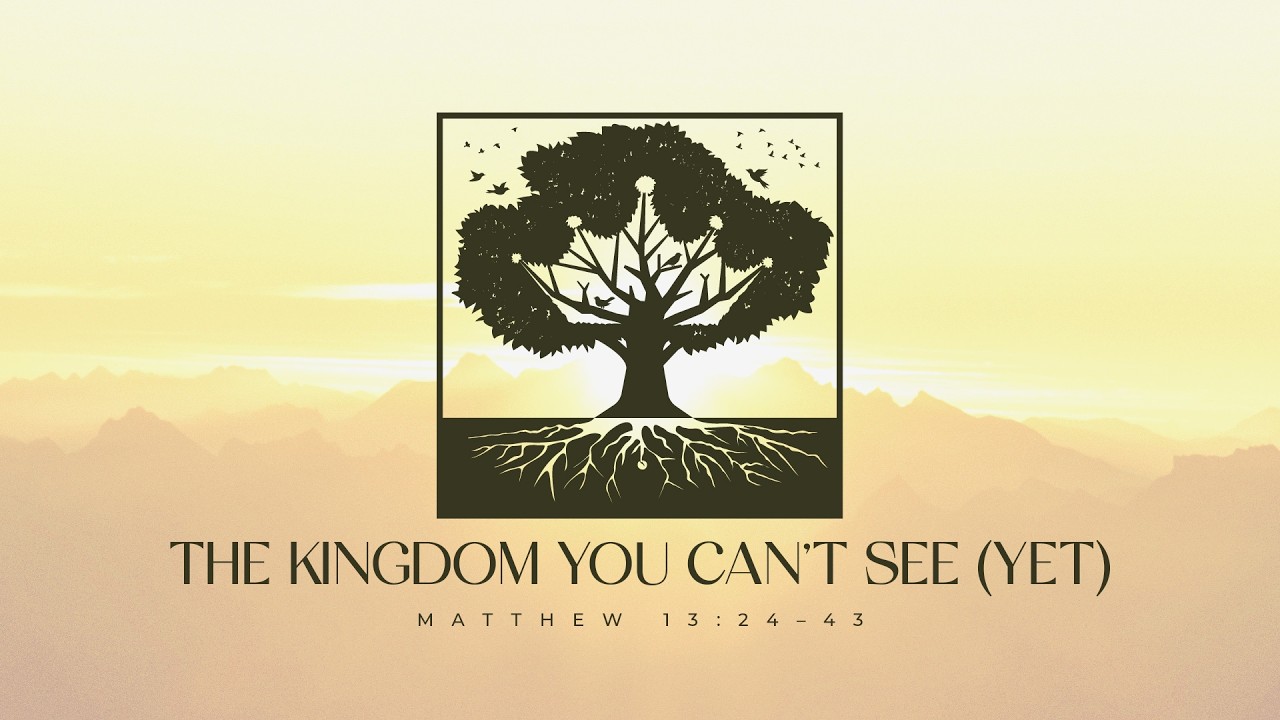
The question naturally arises: How do we know any of this? How can we trust either half of what Jesus has said? The answer lies in understanding that everything Jesus teaches was foreseen and planned from the foundation of the world. From this point forward in Matthew 13, everything Jesus says to the crowds comes wrapped in parables—stories that both reveal and conceal depending on the ears doing the listening. The disciples receive explanations while the crowds receive pictures. This pattern itself was prophesied. Matthew tells us that Jesus' teaching method fulfills what was spoken by the prophet, quoting Psalm 78: "I will open my mouth in parables; I will utter what has been hidden since the foundation of the world." The truth about God's kingdom was always sitting there, hidden in plain sight in Scripture, and now Jesus, the Word himself, is saying it out loud. The negative space in the design reveals a second image once you know where to look—and that is exactly what has happened in the Gospel of Matthew. Jesus does not tell parables to keep secrets or to make people feel slow for not understanding them. He tells them because he has decided to reveal what was hidden.
The wonder of this revelation cannot be overstated. Many prophets and righteous people longed to see what we see and did not see it, and to hear what we hear and did not hear it. Whole generations of godly men and women who loved and trusted God's promises never got to hear what we read aloud on an ordinary Sunday morning. The right response to hidden things finally being revealed is never confusion, suspicion, or a polite shrug—it is joy. Praise God that he did not leave it hidden. Praise God that he sent his own Son to say it plainly. We have even more reason to see it clearly than the crowds or the disciples had, because we have not only parables and promises, but also a cross, an empty tomb, and the Spirit poured out to open eyes that were once blind. Jesus himself embodies this pattern of hidden and revealed: hidden in the manger in an unremarkable town to unremarkable parents, hidden on a cross that looked like total defeat, and then on the third day, gloriously revealed. The gospel itself has this shape of hidden and revealed, which means we have more revealed to us than anyone in that field ever did.
Yet the mixed field is real, and the growth is certain even when invisible. There is one more thing Jesus wants us to see—not yet, but for certain one day. When the disciples ask Jesus to explain the parable of the weeds properly, he tells them and us exactly how it ends. This is not vague imagery; Jesus tells us plainly who does the gathering (his own angels), who gets gathered (all causes of sin and all lawbreakers), and what happens to them (they are thrown into the fiery furnace where there is weeping and gnashing of teeth). This language demands careful attention. Jesus uses "weeping and gnashing of teeth" repeatedly throughout Matthew's Gospel—in chapter 8 verse 12, chapter 22 verse 13, chapter 24 verse 51, chapter 25 verse 30, and twice in this chapter alone. Nobody in Scripture speaks about hell more often, more plainly, or more soberly than Jesus does. This is not confined to Matthew; Mark speaks of a fire that is not quenched and a worm that does not die; Luke tells of a rich man in torment, fully conscious, unable to cross back; Revelation speaks of a lake of fire and final judgment. This is a thread woven throughout the New Testament.
Hell is God's justice—his holy and pure response to deadly serious sin and rebellion. It is genuine, eternal, conscious anguish with nothing left to be done about it once the day arrives. This is what Jesus' earlier warning meant when he said that whoever is not with him is against him. There is no neutral ground. The field we live in does not stay mixed forever. However, this is not where Jesus leaves us. Then the righteous will shine like the sun in the kingdom of their Father. This is not merely relief at having made it out; this is glory. The prophet Daniel pictures something similar: "The wise will be shining like the brightness of the sky, like the stars forever and ever." We can imagine someone we have looked up to—a Christian whose wisdom, peace, and grace for others inspire us—and recognize that their character is merely a foretaste of what Jesus promises is coming: a life that shines like the sun forever. Jesus closes with the line he used at the start of the chapter: "He who has ears, let him hear." The entire chapter has been building toward this one question: not "Did you hear the story?" but "Did you actually hear it? Do you understand?"
For those who are not yet believers—whether you have been coming to church your whole life, finding your way back into it, or still curious and finding out more—please hear this carefully: the same Jesus who came to utter what was hidden also tells us plainly that a day of harvest is coming, with real judgment and a real hell. This is not meant to frighten you into a decision you do not understand, but because Jesus loved people enough to tell the truth plainly. The invitation is offered humbly: come with open hands, ready to actually listen, rather than swinging, testing, demanding proof on your terms, or arguing him into a corner before you will consider him. Maybe today is the day you stop keeping Jesus at arm's length and actually come to him.
For those who call themselves Christians, consider what you see this morning. If you are trusting Christ, you are not one of the weeds waiting for fire; you are wheat, already known by the sower. The promise Jesus just gave us is yours: you will shine like the sun in the kingdom of your Father. Whatever weakness or doubt you feel in yourself right now does not decide the outcome—his sowing decides the outcome. The very growth we cannot always see with our own eyes, the growth we cannot always see in our own hearts sometimes, in our own lives, in this church, and sometimes across our whole network, is actually proof that the kingdom he is growing is exactly as unstoppable as he says. Even a relatively full service, or on some Sundays an overflowing one, could tempt us to assume the work is basically done. But Jesus does not tell us to look at barns that are full; he tells us to look at the fields, and the fields still have wheat and weeds tangled together.
This reality demands a practical response. There are still people we love—friends at school or work, family members, people who sit across the dinner table from us—heading toward the very judgment we have just read about. We cannot be neutral about that. We cannot sit in silence as they await that judgment. The man whose faith started over a haircut, the teenager worn down by the gospel week after week, the man who read his way to church—there are more people like them out there right now, close enough to hear it from someone in this room if there is room for them to hear it. In a full church, that might mean a third service in the future, not for our comfort but for theirs. That is what giving toward a third pastor is for. That is what raising up leaders and church planters is for—so the work of gathering this harvest does not keep falling on fewer and fewer shoulders, so that this work does not stop with us but reaches more people in more places before the harvest comes and it is too late.
Life constantly moves people in all sorts of directions. Rather than simply making peace with people leaving the church, aim at something bigger than the next job, the next city, the next rung on the corporate ladder. If you are graduating and heading home or overseas, do not go simply because you are bonded or have secured work there; go because there are churches who need workers for the harvest. You could be the reason someone there meets Jesus. Wherever you end up in the future, do not just leave this church—be sent from it as a missionary. The work of the kingdom extends far beyond the walls of any single congregation.
So what do you see? When you look at your news feed this week—the world, your own life, even this church—you will see weeds tangled up in the wheat, and that is real. We cannot pretend otherwise. But look again with the eyes that Jesus has given you, and you will see a kingdom growing quietly, unstoppably, toward a day when everything hidden gets revealed for good. That is the real news feed. Do not let the earthly one talk you out of it. The mixed field we inhabit is not permanent. There is a day coming when everything tangled and uncertain right now gets sorted out for good—not by us, not on our timing, but by the one who has already told us exactly how it ends. This should sober us as we think about the people we love who are facing judgment, and it should thrill us at the same time as those who belong to Jesus.
Conclusion & Final Thoughts
As we close, let us hold together the two great truths Jesus has revealed to us this morning: the real, present evil tangled through our world, and the certain, unstoppable growth of God's kingdom that will one day be gloriously revealed. The mixed field we inhabit is not permanent—a harvest is coming, and everything hidden will be sorted out for good, not by our hands or timing, but by the One who has already told us exactly how it ends. If you have not yet come to Jesus, hear His invitation plainly: come humbly, with open hands, ready to listen, before that day arrives. For those of us who call ourselves Christians, the comfort is this—you are wheat, already known by the Sower, and you will shine like the sun in your Father's kingdom. But with that assurance comes an urgent responsibility: the fields around us are still full of people we love, heading toward judgment, and we cannot be silent. Whether you are graduating and heading overseas, changing jobs, or simply living your daily life, do not merely go—be sent as a missionary from this church. The work of gathering this harvest does not rest on fewer and fewer shoulders; it calls for all of us to make room, to raise up leaders, to speak, to serve, and to give, so that more of the harvest comes in while there is still time. This is the real news, far greater than any earthly feed: God's kingdom is growing, quietly and unstoppably, toward glory, and you have been invited to be part of it.